Preparing for pregnancy: preconception nutrition
The three to six months before pregnancy are a useful window: the time to adjust nutritional status and habits, before requirements rise sharply.
Gabriela Ferent — Qualified dietitian · Affiliated with the CNS

3 to 6 months before conception
Any supplementation is your doctor’s decision
Micronutritional checklist
Essential from the start of the project.
Maternal thyroid support.
Egg quality and balance.
Nutrition supports health, without guaranteeing conception.
What the assessment covers
The assessment covers actual intake, habits (coffee, alcohol, tobacco, work rhythm), weight and interpretation of the lab tests ordered by your doctor. The practice sells no supplements and prescribes no supplementation.
- Iron, folate, iodine, vitamin D and calcium intake
- Food safety: listeria, toxoplasmosis, high-risk fish
- Weight and metabolic balance before conception
Nutritional markers before conception
Iron, folate, iodine
Intake tracked together with vitamin D and calcium before conception.
Food safety
Guidance on listeria, toxoplasmosis and high-risk fish.
Weight and balance
Weight and metabolic balance considered before conception.
Medical coordination
Lab results read with your doctor as the reference, no supplementation prescribed here.
What is worked on in practice
Once the assessment is done, the work focuses on concrete markers: regular meals, nutrient density, spreading iron and folate sources, managing coffee and alcohol, and fitting work schedules.
- A realistic meal plan with no forbidden food
- Reading lab results with your doctor as the reference
- Food-hygiene markers before conception
What the follow-up does not promise
No diet guarantees a pregnancy or treats infertility. Fertility work-ups, treatments and supplementation are your doctor’s or fertility clinic’s remit; the practice works alongside them on intake and habits.
What you may notice
Many couples come when they start planning a pregnancy, when conception is taking time or during assisted reproduction.
- Irregular cycles or PCOS
- Very low or high body weight
- Vegan diet or diabetes
- History of nutritional deficiency
What happens in the body
Ovulation depends on a hormonal balance sensitive to nutritional status; too little energy, insulin resistance or deficiencies can disrupt it.
- Sperm quality renews over about three months, linked to lifestyle
- Folate, iron, iodine and vitamin D stores matter at conception
- They also matter for early pregnancy
- Any supplements are decided by your doctor or midwife
How support works
Gabriela sees people in Luxembourg City, Ettelbruck or Insenborn, alone or as a couple.
- Actual meals, alcohol, caffeine and fish are reviewed
- Green vegetables and iron sources are identified together
- Simple meals built for the whole household
- No miracle fertility diet, no promise of pregnancy
How support works
The partner is included when desired, for shopping, meals and alcohol.
- Breakfast, evening meals and alcohol discussed together for both
- Available test results and medical timetable brought to appointments
- A few concrete changes favoured over a list of rules
- Not conceiving explored by the fertility team, without blaming food
What belongs to your physician
Diagnosis, tests and medical treatment remain your doctor's responsibility. Dietetic support adapts to them and, with your agreement, a report is sent to your doctor.
Articles to go further
Frequently asked questions about preconception nutrition
Periconceptional supplementation is a medical decision. Your doctor prescribes it and sets the dose; the practice works on dietary intake.
Yes. Eating habits are often shared, and a pregnancy plan concerns the partner too. Meals can be planned for the whole household.
Ideally a few months beforehand, to adjust habits and check needs with your doctor. It is never too late to come, though.
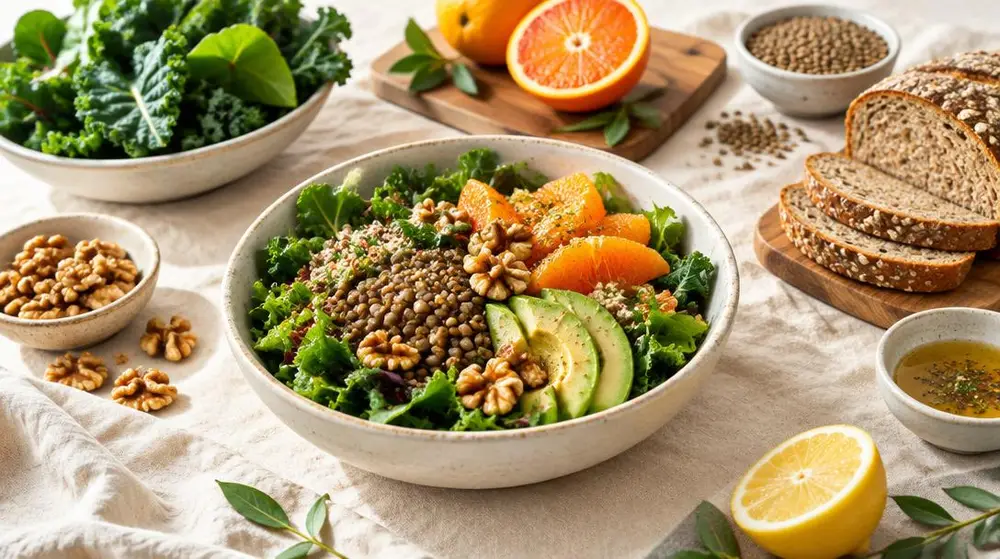
No diet guarantees pregnancy. We favour a varied, sufficient diet suited to your health: vegetables, fruit, legumes, grains, protein sources and good-quality fats. Needs differ with PCOS, diabetes, an eating disorder or a vegan diet. Weight loss is not an automatic goal, and severe restriction can be unhelpful. Alcohol and smoking are discussed with your doctor as part of the fertility review. Supplements, including folate, follow your doctor’s or midwife’s recommendations; the practice sells no products.
Ready to start your care pathway?
Book an appointment with Gabriela Ferent — three practices in Luxembourg, consultations with possible CNS coverage on prescription, or privately.
Book an appointment