Diverticulosis and diverticulitis: flare and recovery
Diverticulosis means small pouches in the colon; diverticulitis is their inflammation. During a flare, medical instructions take priority. Outside a flare, food variety is rebuilt gradually without unnecessary exclusions.
Gabriela Ferent — Qualified dietitian · Affiliated with the CNS
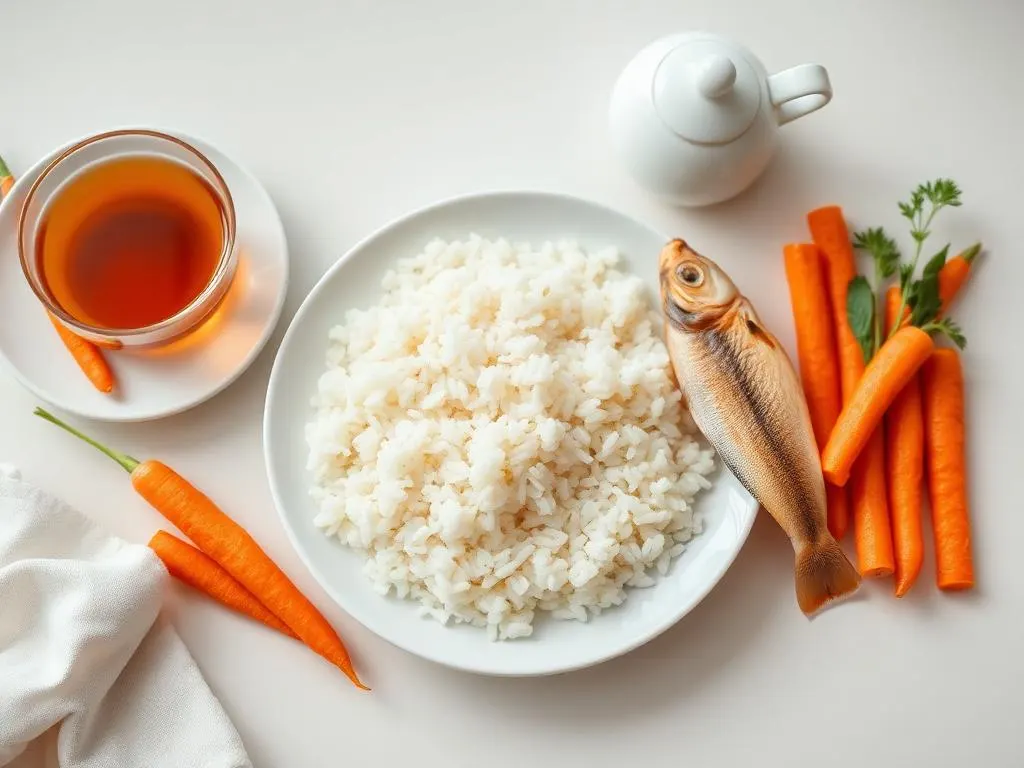
A flare requires medical care
Fibre reintroduced gradually
Recognising warning signs
Fever, significant abdominal pain or bleeding require prompt medical advice. Call 112 for faintness, very severe pain or heavy bleeding. A dietetic consultation does not replace assessment of an acute flare.
During diverticulitis: follow the prescription
Depending on severity and tolerance, your doctor may temporarily prescribe liquids or a low-residue diet. Do not start fasting or prolonged restriction on your own. Difficulty drinking or worsening symptoms require renewed medical contact.
Dietary steps around a diverticulitis episode
During the flare
Follow the medical prescription, sometimes liquids or low-residue, without fasting on your own.
After the flare
After medical clearance, gradually return to cooked vegetables, fruit, then whole grains as tolerated.
Day to day
Varied diet with fibre as tolerated; nuts and seeds are no longer routinely avoided.
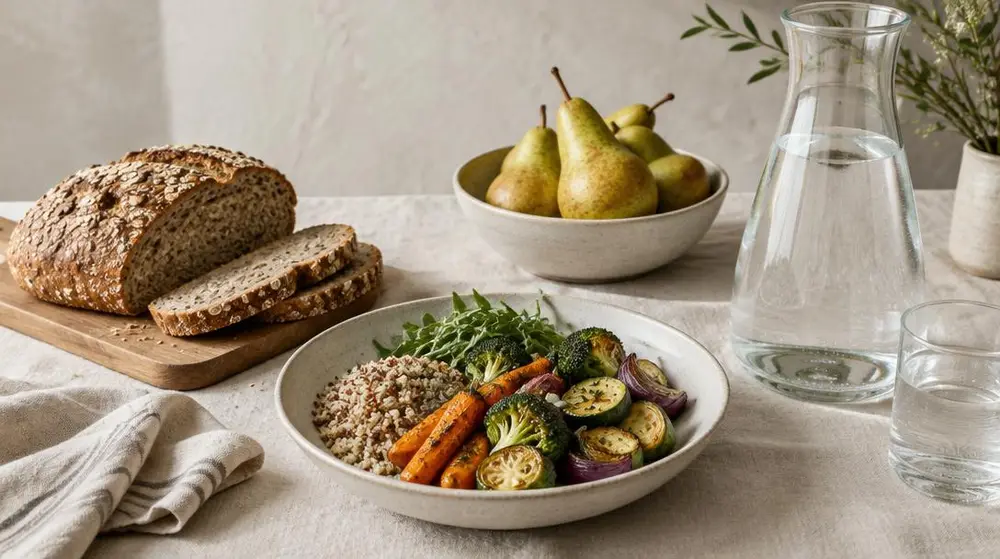
Diverticulitis and diet after a flare: bringing fibre back
After medical clearance, fibre returns gradually: cooked vegetables, fruit, then whole grains and pulses as tolerated. Hydration is adapted to your health. Gradual progress limits discomfort without unnecessarily extending the flare diet.
Nuts, seeds and everyday prevention
Current evidence does not support routinely avoiding nuts, seeds or popcorn to prevent flares. A varied diet with fibre as tolerated and suitable activity supports digestive health without guaranteeing freedom from recurrence.
Distinguishing an incidental finding from an acute episode
Finding diverticula during an exam doesn’t explain every abdominal pain; some signs need urgent medical attention.
- Diverticulosis can stay silent; diverticulitis is an inflammatory episode requiring medical assessment.
- New or worsening pain with fever, vomiting or difficulty drinking should be reported promptly.
- Severe pain, faintness or significant bleeding needs urgent care.
- Don’t manage these signs by changing fibre intake or fasting on your own.
- Dietetic support follows medical guidance and never delays needed investigations or treatment; if unsure about recurrence, contact your medical team instead of reusing an old plan.
Why advice changes with the phase
Diverticula are small pouches in the colon wall; food advice shifts between acute inflammation and quieter periods.
- During acute inflammation, food choices depend on severity, tolerance and the medical plan; progression varies by person.
- After recovery, keeping a very low-fibre diet for a long time can unnecessarily limit variety and food choices.
- Between episodes, fibre supports stool volume and consistency, though adding it too fast can worsen gas.
- Pace matters as much as food choice when reintroducing fibre.
- Seeds and nuts aren’t automatically excluded just because diverticula were found; medical instructions still take priority.
Rebuilding meals after an episode
Follow-up with Gabriela builds on hospital or doctor’s instructions, moving step by step toward greater variety.
- Together you clarify current manageable textures and portions, then steps toward vegetables, fruit, grains and fibre sources.
- Reintroducing one food in a small amount helps assess tolerance better than changing the whole menu.
- Drinks are adapted to any medical fluid restriction, including heart or kidney conditions.
- In Luxembourg-Ville, Ettelbruck or Insenborn, support also considers fear of eating after an episode.
- Returning pain or new fever needs medical advice, not an improvised extension of a restrictive diet.
Bring discharge instructions so that temporary advice is not accidentally continued after recovery. Review the next dietary step with your treating team.
What belongs to your physician
Diagnosis, tests and medical treatment remain your doctor's responsibility. Dietetic support adapts to them and, with your agreement, a report is sent to your doctor.
Frequently asked questions
No, not routinely. Outside a flare, choices follow tolerance and any individual medical instructions.
No. When prescribed it is temporary; your doctor guides the return to food.
Fever, significant pain or blood in stools need prompt advice. For faintness, very severe pain or heavy bleeding, call 112.
Ready to start your care pathway?
Book an appointment with Gabriela Ferent — three practices in Luxembourg, consultations with possible CNS coverage on prescription, or privately.
Book an appointment