Adopting an anti-inflammatory way of eating
An anti-inflammatory diet means an overall approach to meals here, not a list of miracle foods. Support focuses on variety and nutritional balance according to your needs and tolerance. It does not promise to cure an inflammatory condition or replace prescribed treatment.
Gabriela Ferent — Qualified dietitian · Affiliated with the CNS
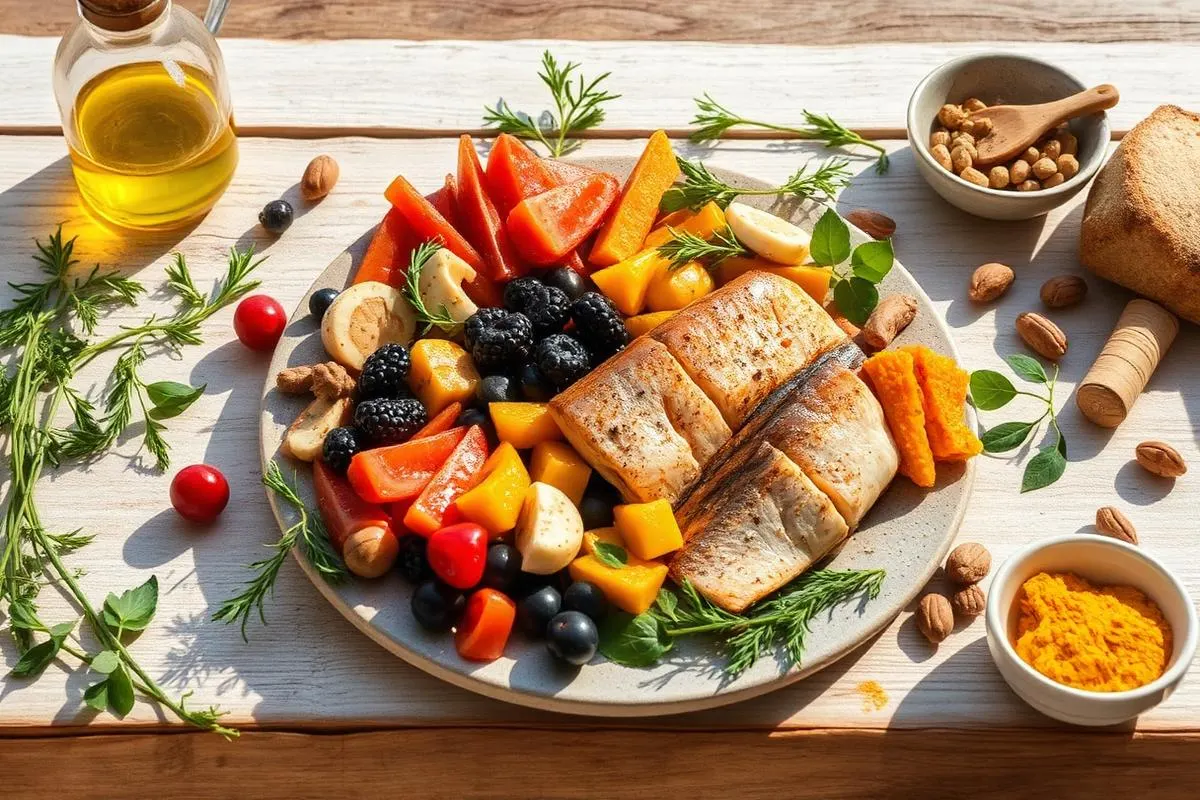
Mediterranean pattern, high in fibre
Cures, detoxes and "anti-inflammatory" supplements
Mediterranean model pillars
Varied colors (berries, spices, veggies).
Fat balance (walnuts, small fish).
Microbiota health (legumes, grains).
Anti-inflammatory eating is a lifestyle, not a temporary cure.
Anti-inflammatory eating: the overall pattern rather than superfoods
The strongest evidence concerns regular intake of vegetables, fruit, pulses, whole grains, oily fish and olive oil, combined with reduced ultra-processed products and alcohol.
- Oily fish twice a week
- Fibre: a gradual target of 25–30 g per day
- Reducing ultra-processed products
- No promise of curing an inflammatory disease
A balanced everyday plate
- Varied vegetables
- Protein
- Wholegrain starches
- Healthy fats
Vegetables, pulses, whole grains, oily fish and olive oil, with fewer ultra-processed products.
What is worked on in practice
The work targets meal structure rather than isolated foods: the place of plants and fibre, fat quality, how often ultra-processed products appear, meal regularity and sleep.
- A day-to-day meal framework with no forbidden food
- Fats: oils, oily fish, nuts
- Adapting to work meals and family constraints
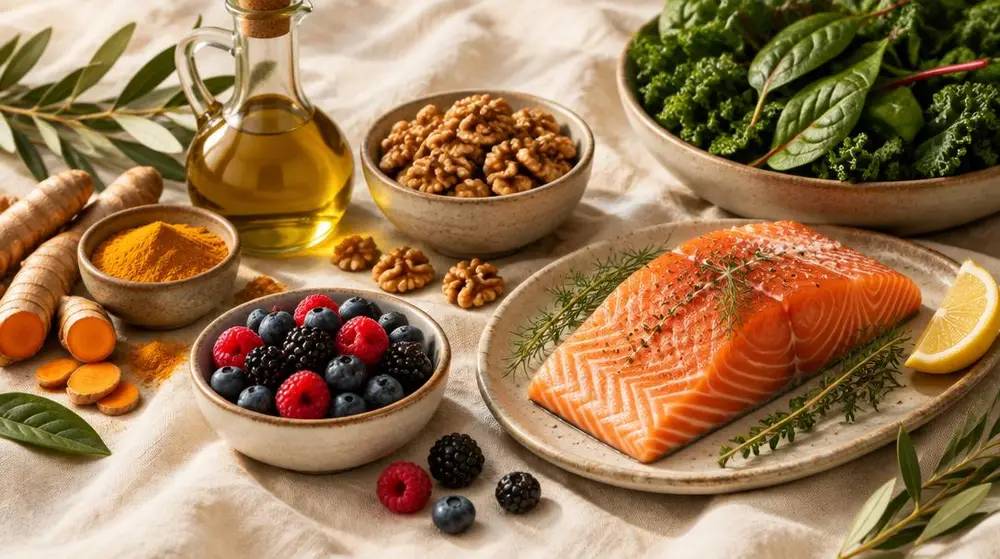
What this approach does not promise
This approach treats nothing and replaces no medical treatment.
- No diet treats an inflammatory disease or replaces a treatment
- Expected benefits: overall diet quality and cardiometabolic risk factors
- Your condition remains monitored by your doctor
- No supplement is recommended or sold
Start with your difficulties, not a label
Pain, tiredness or digestive issues first deserve medical attention, not only dietetic advice.
- These symptoms have many possible causes, not proven to be linked to meals
- Medical assessment needed if symptoms persist, worsen or cause unintentional weight loss
- Significant pain, bleeding or faintness: assess immediately, without waiting for dietetics
- Support first clarifies your concerns and diagnoses before any diet
- A reaction after one meal is not a diagnostic test
An eating pattern, not a universal treatment
Inflammation is a complex body response, interpreted by your doctor, not by feeling.
- It is not always abnormal and cannot be measured by how you feel after a meal
- In chronic disease, interpreting and treating it is the doctor's responsibility
- Anti-inflammatory here describes an overall pattern close to Mediterranean eating, not a guaranteed organ effect
- Variety, fibre and fat quality matter more than one celebrated food
- Choices respect energy needs, digestive tolerance and medical restrictions, with no immunity promise
Building guidance that fits everyday life
In Luxembourg-Ville, Ettelbruck or Insenborn, Gabriela starts from what you actually eat, not an ideal menu.
- You bring available test results, medical instructions and examples of usual meals
- We look at meal times, shopping, budget, work meals and difficulties at home
- Changes are chosen together, keeping favourite foods and family habits wherever possible
- This may mean an adapted recipe, a solution for busy days or an accessible alternative
- At follow-up, we discuss what was manageable and appetite, without judging one meal; diagnosis and medication remain with your doctor
What belongs to your physician
Diagnosis, tests and medical treatment remain your doctor's responsibility. Dietetic support adapts to them and, with your agreement, a report is sent to your doctor.
Articles to go further
All resources published by the practice on this topic — practical markers, sample menus and answers to the most frequent questions.
Frequently asked questions about anti-inflammatory eating
No. No spice or supplement replaces a prescribed anti-inflammatory treatment. The practice sells no supplements.
A base of vegetables, whole grains or legumes, a protein source, oils such as olive or rapeseed oil, and oily fish from time to time, inspired by the Mediterranean pattern.
No. Plain frozen vegetables, canned legumes and simple ready-to-use foods can make meals easier. Options are chosen around your budget, fatigue and medical requirements. The goal is not perfect eating or a rigid forbidden-food list, but a workable overall pattern.
Ready to start your care pathway?
Book an appointment with Gabriela Ferent — three practices in Luxembourg, consultations with possible CNS coverage on prescription, or privately.
Book an appointment