Joint pain, rheumatic and autoimmune conditions
Rheumatoid arthritis, psoriasis or psoriatic arthritis, and ankylosing spondylitis: nutrition supports care but does not replace it. Support can also help with fibromyalgia, which is not an autoimmune disease, while accounting for fatigue and pain.
Gabriela Ferent — Qualified dietitian · Affiliated with the CNS

Complements care, never replaces it
Mediterranean pattern and muscle support
A Mediterranean pattern, not a miracle diet
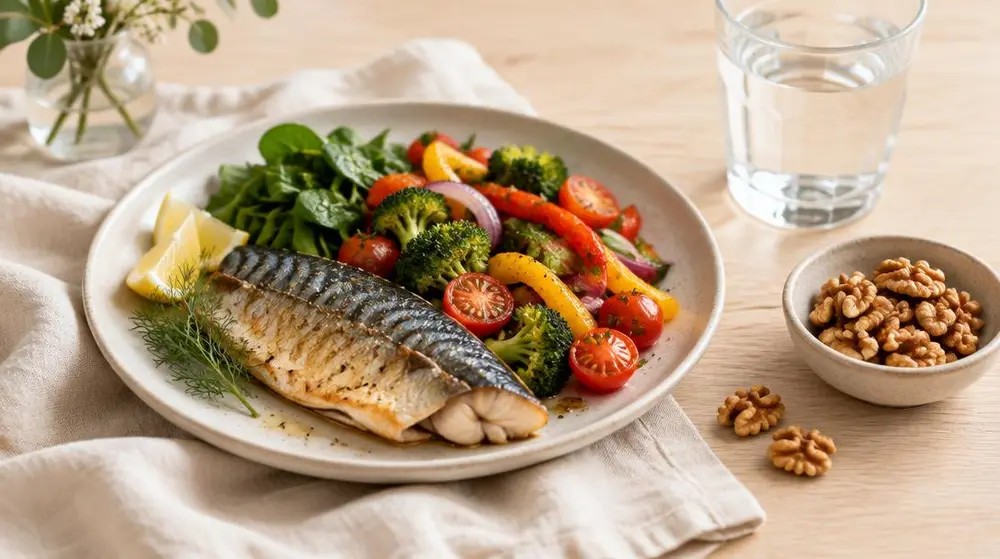
Vegetables, fruit, whole grains, pulses, olive oil and nuts form an adaptable foundation. Oily fish provides omega-3s; walnuts and rapeseed oil provide a plant form. This pattern supports general health without promising to eliminate inflammation or pain.
Weight, pain and actual needs
Where appropriate, gradual weight change may reduce joint loading. Weight loss is not always indicated: fatigue, poor appetite and muscle loss sometimes call for more nourishing meals. Goals are agreed with you without blame.
Corticosteroids: protecting bone and muscle
With long-term corticosteroids, support addresses protein, dietary calcium, balanced meals and suitable activity. Your doctor assesses bone risk, vitamin D and any preventive measures needed. Never change corticosteroid treatment on your own.
Manageable meals on difficult days
Frozen vegetables, tinned pulses and meals prepared ahead reduce kitchen effort. Gluten or dairy exclusions are not routine without an indication. Support complements rheumatology treatment and makes no claim to cure disease.
Everyday food patterns
Protective / supportive foods
- Vegetables, fruit, whole grains and pulses
- Olive oil and nuts
- Oily fish and rapeseed oil for omega-3s
- Frozen vegetables and tinned pulses on difficult days
To adjust to your individual tolerance
- Weight loss not automatic, discussed according to the situation
- Protein and calcium to monitor with long-term corticosteroids
- Multiple gluten or dairy exclusions only if indicated
Tolerance thresholds and adjustments remain strictly individual and are defined during the assessment at the practice.
Eating when pain and fatigue interfere
Pain, stiffness and fatigue can make shopping or cooking difficult, without this ever meaning a lack of motivation.
- On some days, preparing a meal takes energy you simply do not have.
- These difficulties deserve to be heard and taken seriously.
- Persistent pain or swollen joints needs medical investigation.
- A suddenly hot, painful joint, especially with fever, requires prompt assessment.
- Dietetic care complements rheumatology follow-up, without identifying the cause or replacing treatment.
Inflammation, immunity and nutritional needs
In autoimmune disease, some immune mechanisms target the body’s own tissues, and no single food corrects this.
- This complex process does not mean immunity needs boosting.
- The illness, reduced mobility and some treatments can affect appetite, muscle mass or bone health.
- Nutrition support considers these effects and medical instructions, without promising a cure.
- Multiple exclusions mainly risk reducing food variety and nutritional intake.
- Suspected intolerance or digestive disease needs assessment before a food group is removed long term.
Building guidance that fits everyday life
During a consultation with Gabriela in Luxembourg-Ville, Ettelbruck or Insenborn, the starting point is what you actually eat, not an ideal menu.
- You can bring available test results, medical instructions and examples of your usual meals.
- We look at meal times, shopping, budget, food at work and difficulties at home.
- Changes are chosen together, keeping favourite foods and family habits wherever possible.
- This might mean adapting a recipe, preparing an option for busy days or an accessible alternative.
- At follow-up, we discuss what was manageable, appetite and difficulties, without judging an individual meal.
- Diagnosis, investigations and decisions about medication remain with your doctor.
What belongs to your physician
Diagnosis, tests and medical treatment remain your doctor's responsibility. Dietetic support adapts to them and, with your agreement, a report is sent to your doctor.
Frequently asked questions
No. It complements care and helps meet nutritional needs; treatment remains your doctor’s responsibility.
Not without an identified indication. Unnecessary exclusions can make meeting nutritional needs harder.
Yes, to adapt meals to fatigue, pain and nutritional needs, without describing fibromyalgia as an autoimmune disease.
Ready to start your care pathway?
Book an appointment with Gabriela Ferent — three practices in Luxembourg, consultations with possible CNS coverage on prescription, or privately.
Book an appointment